


Last Updated: November 10, 2026
Quick Summary
Choose educational tools for mixed-age groups that are open-ended, safe for the youngest child, durable, and adjustable in difficulty. Loose parts, movement games, and music activities let a three-year-old and a nine-year-old play together while each stays challenged.
- Check safety first, since the smallest child in the group sets the safety bar.
- Look for open-ended tools with no single right answer, like blocks, scarves, and cups.
- Pick tools that let you make tasks easier or harder without buying something new.
- Choose tools that two or three children can use together to prevent turn-taking fights.
- Set up three stations and rotate groups every 15 minutes for smooth mixed-age play.
Table of Contents
- Why Mixed-Age Groups Are Worth the Effort
- The Downsides of Mixing Ages in Early Childhood
- What Makes an Educational Tool Work for Several Ages
- The Best Educational Tools for Mixed-Age Groups
- Using Educational Tools in a Child Care Setting
- Planning Activities and Tracking Progress for Each Age
- Start Your Mixed-Age Toolkit with Dewey Does
- Frequently Asked Questions
Why Mixed-Age Groups Are Worth the Effort
Hi, I’m Dewey Does, and I’m nine years old. My favorite days are the ones where the big kids and the little kids play together. Mixed-age groups can make learning feel like an adventure for everyone.
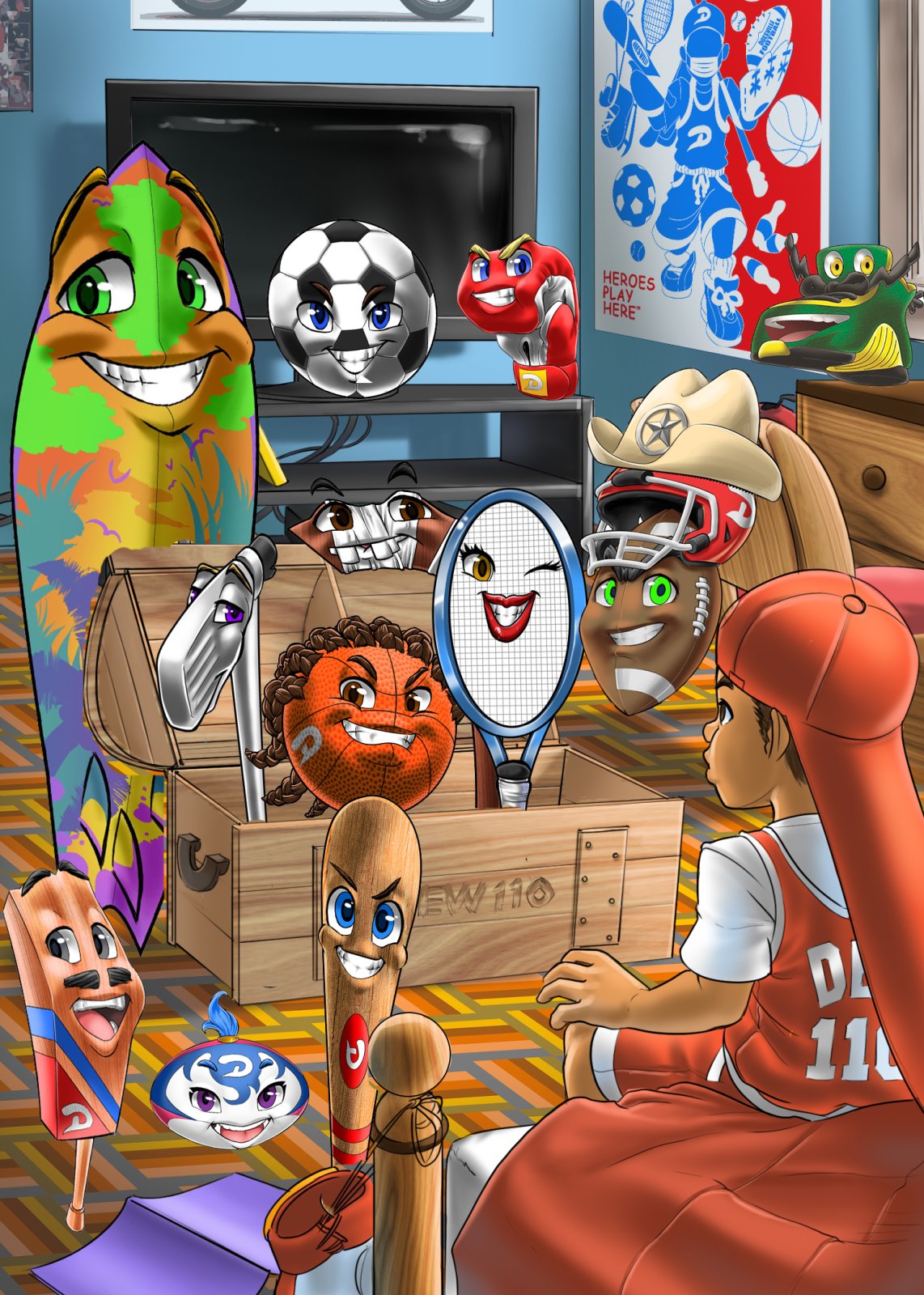
Mixed-age groups are common in homes, child care centers and classrooms across the United States. When kids of different ages learn side by side, they pick up new skills from each other.
- Younger children copy older kids who can already tie shoes or count to twenty.
- Older children practice patience and leadership when they help someone smaller.
- Everyone gets to see that different kids learn at different speeds.
The Downsides of Mixing Ages in Early Childhood
Mixing ages is not always easy, and I want to be honest about that. Some kids feel bored when a task is too simple. Others feel overwhelmed when it is too hard.
Here are the most common challenges:
- Uneven skill levels: A four-year-old and an eight-year-old may need very different activities.
- Turn-taking fights: Older kids may want to grab the toy first.
- Frustration: Younger kids may feel left out if they cannot keep up.
The good news is that these problems often have simple fixes. Choose activities with more than one level of challenge, and give older kids a job that makes them feel proud.
What Makes an Educational Tool Work for Several Ages
A good tool for mixed ages has a few key traits. It should be open-ended, so each child can use it in their own way. It should also have simple rules that a young child can understand, plus room to add harder challenges for older kids.
But picking a tool is not just about whether it looks fun. Before I add anything to our mixed-age shelf, I run it through six checks.
- Safety across every age: The smallest child in the group sets the safety bar. Check for small parts that a toddler could swallow, sharp edges, pinch points, and long cords. A toy that is safe for a nine-year-old may not be safe for a three-year-old, so the tool has to pass the youngest user’s test first.
- Accessibility: Can a short child reach it? Can a child with limited hand strength use it? Can a child who is still learning English understand it without a lot of talking? Tools with big pieces, clear shapes, and low reading demands work for more kids at once.
- Durability: Mixed-age groups are hard on materials. Look for thick cardboard, washable surfaces, and pieces that do not tear or bend the first week. A tool that falls apart becomes a cleanup job instead of a learning tool.
- Open-endedness: The best tools do not have one right answer. Blocks, scarves, cups, and loose parts can become a tower, a shop, or a story. A tool with only one solution usually fits only one age.
- Adjustability: Look for tools that let you make the task easier or harder without buying something new. A matching game with picture cards and word cards is one example. A movement game with a slow version and a fast version is another.
- Group play options: A tool that only one child can use at a time causes turn-taking fights. Tools that let two or three kids work together, or that have enough pieces for a small group, keep the peace.
A simple way to judge a tool is to ask three questions: Can the youngest child in my group use it safely? Can the oldest child in my group still find a challenge? Can two children use it together without a fight? If the answer to all three is yes, it is probably a good fit.
Watch out: A tool can look perfect on the box and still fail the youngest-child safety check, so always test small parts and edges yourself before putting anything on the shelf.
When a tool meets these needs, it works for a three-year-old and a nine-year-old at the same time. Use this checklist before you buy or set up anything new.
The Best Educational Tools for Mixed-Age Groups
Tools that work well for mixed ages tend to fall into a few simple groups. Each one can be adjusted so every child feels challenged without feeling lost.
| Tool Type | Best For | Easy to Adjust? |
|---|---|---|
| Open-ended materials | Ages 3-9 together | Yes |
| Movement games | Groups of mixed sizes | Yes |
| Music activities | Shared group play | Yes |
| Matching or sorting games | Early learners and older kids | Yes |
Open-ended materials and loose parts
Loose parts are my favorite. Blocks, buttons, cups and scarves can be used in many ways. A small child might stack them, while an older child builds a whole story around them.
Dewey Does offers a Matching Game that works this way. Younger kids match shapes, and older kids can make up their own rules. You can also explore the play based learning games for kids collection for more open-ended ideas.
Movement, music and cardboard games
Movement keeps every child busy at once. A simple game of freeze dance works for toddlers and older kids alike. Cardboard games let kids build their own boards and rules.
Music is another great option. Singing songs with actions helps young children learn words while older kids keep the beat. You can try the Dewey Does Music activities to get started. For a fun challenge, the Dewey Does Jingle Challenge mixes movement and rhythm for groups of all ages.
Using Educational Tools in a Child Care Setting
In a child care room, the trick is to set up stations. Put two or three activities in different corners, and let kids move between them. Each station can have a simple goal and a harder version for older children.

Here is a simple setup plan:
- Set up three stations with different materials
- Pair an older child with a younger child at each one
- Rotate groups every 15 minutes
- End with a short group song to bring everyone together
Clear routines help. Kids do best when they know what happens next and what is expected of them.
Planning Activities and Tracking Progress for Each Age
Planning works best when you start with the youngest child’s needs, then add challenges for the older kids. A simple weekly plan can keep a mixed-age group busy without anyone feeling left behind.
Here is a sample 45-minute block for kids from about three to nine years old:
- Warm-up (5 minutes): A group song with actions. Everyone can join, and it brings the group together.
- Station time (25 minutes): Set up three stations. One station has open-ended building materials, one has a matching or sorting game, and one has a movement or music activity. Pair an older child with a younger child at each station, and rotate groups every eight minutes.
- Wrap-up (10 minutes): A short group game or a share-out where each child shows one thing they made or learned.
- Reset (5 minutes): Everyone helps put materials back. This teaches responsibility and makes the next day easier.
For each station, write down two versions of the task: an easier version for younger or less experienced children and a harder version for older or more skilled children. For example, at the building station, younger kids can stack blocks, while older kids can build a bridge that holds a small toy. At the matching station, younger kids can match colors, while older kids can sort by two traits at once.
Tracking progress does not mean comparing children by age. Instead, keep a simple observation chart with three columns: the child’s name, what they did, and what they practiced. A note like “Maya built a tower and counted the blocks” tells you more than a score. A note like “Leo explained the rules to a younger child” shows leadership. A note like “Sam tried a new puzzle after watching a friend” shows persistence.
Here are some observation prompts to use while kids play:
- Did the child try a task without help?
- Did the child ask for help or offer help?
- Did the child stick with a task after it got hard?
- Did the child explain something to another child?
- Did the child use the material in a new way?
Watch out: It is easy to slip into comparing a younger child to an older sibling or classmate, so write observations about what each child did, not about how they rank.
If an activity falls flat, change one thing at a time. Make the rules simpler, add a helper, or swap in a different material. Keep the plan short and flexible, and let the kids show you what they love.
Start Your Mixed-Age Toolkit with Dewey Does
Choosing educational tools for mixed-age groups does not have to be hard. Start with open-ended materials, add a movement game, and let the kids show you what they love. At Dewey Does, we make tools that let every child join in, from the youngest learner to the oldest in the group.
Browse our collection today and build a toolkit your whole group will enjoy.
Frequently Asked Questions
How do you teach a mixed-age class?
I start by finding one activity that every child can join and then let each kid work at their own level. A counting game can ask a four-year-old to count to ten while a seven-year-old adds the numbers together. Older kids often help younger ones, which builds leadership and patience. I keep routines the same every day so the children always know what comes next, and I rotate activities so no one gets bored or left behind.
What are some examples of educational tools for mixed-age groups?
Open-ended materials like blocks, sand, and loose parts work for almost any age because each child uses them in their own way. Picture books with simple text and rich illustrations let younger children look at the pictures while older children read the words. Movement games, sing-alongs, and cardboard building projects are also strong choices. Pricing depends on quantity and materials, so check Dewey Does’s website for current options and a quote.
What’s the biggest benefit of mixing different age groups in a classroom?
The biggest benefit is often peer learning. Younger children watch older ones solve problems, and older children practice explaining ideas, which helps both of them. Kids in mixed-age groups also tend to develop empathy and cooperation because they learn to adjust their play for different abilities. Each child can work at a level that fits their developmental stage.
How can one activity support children at different developmental levels?
Choose an activity with several entry points. A scavenger hunt can ask younger children to find a red object while older children find three objects that start with the same letter. Music activities let a three-year-old clap the beat while a nine-year-old keeps the rhythm with a simple instrument. Give everyone the same materials and let the level of challenge change with each child’s skills.
