

Last Updated: October 22, 2026
Quick Summary
Fun character building activities for kids work best when they feel like play, not a lecture, because children absorb honesty, empathy, and responsibility fastest when they are laughing, moving, and solving a problem with someone else. Try role-playing scenarios, collaborative team challenges, gratitude routines, and creative arts projects, keeping rounds short and debriefing afterward.
- Role-playing scenarios like The Lost Wallet teach integrity and empathy in five-minute rounds.
- Team building games such as Human Knot and Bridge Build teach accountability and resilience.
- Gratitude routines include Three Good Things, Thank-You Note Friday, and a gratitude jar.
- For K-2, keep activities under 10 minutes and tie them to one visible behavior.
- For neurodivergent kids, shorten rounds, add visual cues, preview rules, and offer choice.
Table of Contents
- Why Play Is the Fastest Route to Character Building
- The Best Character Building Games for Kids
- Social Emotional Learning Exercises for Children
- Character Education Activities for Elementary Students
- Family-Centered Character Activities for Home
- Adapting Activities for Neurodivergent Kids
- Tracking Progress: Simple Ways to Measure Character Growth
- Conclusion
- Frequently Asked Questions
Why Play Is the Fastest Route to Character Building
Character building activities work best when they feel like play, not a lecture. That is the core idea behind everything we do at Dewey Does: kids absorb honesty, empathy, and responsibility fastest when they are laughing, moving, and solving a problem with someone else.
We have watched this play out since 1999. Children learn character traits through behavioral modeling and repetition, not instruction alone.
The good news: you do not need a curriculum to start, just a few reliable activities and consistency.
The Best Character Building Games for Kids
The best character building games for kids are short, social, and built around a simple rule that forces a choice: share, wait, listen, or help.
Role-Playing Scenarios That Teach Integrity and Empathy
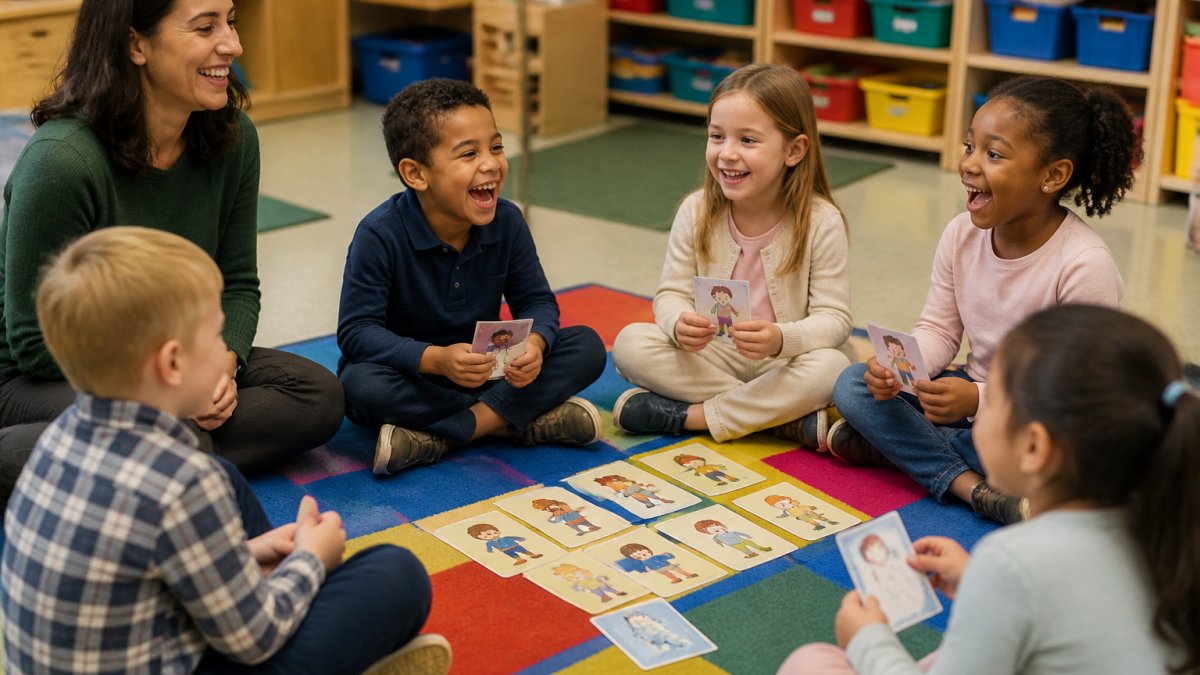
Role-playing is the fastest way to build perspective-taking. Give kids a scenario card and let them act it out:
- The Lost Wallet: A child finds a wallet with cash inside. What do they do? Act out each choice and talk about how the owner feels.
- The New Kid: One child plays a student who just moved and knows no one. The others practice welcoming them.
- The Broken Toy: Two friends must decide who apologizes and how they make it right.
Keep each round to five minutes, then ask one question: “How did the other person feel?” That does more for empathy than a dozen reminders to “be nice.”
Collaborative Play and Team Building Challenges
Team building games teach accountability because the group feels the result together. A few that work with almost any age:
- Human Knot: Kids link hands and untangle without letting go. It forces active listening and cooperation.
- Bridge Build: Teams build a paper bridge that holds weight. Failure is part of it, which builds resilience and a growth mindset.
- Silent Line-Up: Kids arrange themselves by birthday without speaking. Great for self-regulation and nonverbal communication.
Social Emotional Learning Exercises for Children
Social-emotional learning exercises give kids a daily habit of noticing feelings, naming them, and responding well. These SEL strategies fit into five minutes and need no special materials.
Gratitude Routines and Mindfulness Moments
Gratitude grows through routine, not one-time talks. Pick one and repeat it:
- Three Good Things: At dinner, each person names three good things from the day.
- Thank-You Note Friday: One short note to someone who helped that week.
- Gratitude Jar: Kids drop in a slip of paper whenever they feel thankful, then read them aloud monthly.
Pair these with a one-minute mindfulness pause: three slow breaths before homework or bed. That small pause builds emotional intelligence by teaching kids to notice a feeling before acting on it.
Active Listening and Perspective-Taking Practice
Active listening is a skill kids can practice like a sport. Try the Echo Game: one child speaks for 30 seconds, and the listener repeats back what they heard before responding.
For perspective-taking, use the Two-Chair Talk. A child sits in one chair as themselves and the other as a friend they disagree with, then argues both sides.
Character Education Activities for Elementary Students
Character education activities for elementary students work best woven into the school day rather than saved for a special lesson. The most effective classroom-based approach pairs a clear value with a hands-on project and a chance to reflect.
Age-Specific Segmentation: K-2 vs. 3-5
Most character education resources lump all elementary grades together. That is a mistake, use this breakdown to match the activity to the child’s developmental stage.
Grades K-2 (ages 5-7): Concrete, sensory, and short.
Children at this stage learn character traits through repetition and physical experience, not abstract discussion.
- Kindness Sorting: Give pairs picture cards showing acts (sharing, interrupting, helping, grabbing). Kids sort into “kind” and “not kind” piles, then act out one “kind” card. This builds empathy through concrete categorization before language catches up.
- The Turtle Technique: Teach a simple self-regulation routine, tuck arms, take three breaths, say “I need a minute.” Practice it during calm moments so it becomes automatic during frustration.
- Feelings Charades: One child acts out a feeling; others guess. This builds emotional vocabulary and perspective-taking without requiring writing or reading.
Grades 3-5 (ages 8-11): Social, reflective, and collaborative.
Older elementary students can handle abstraction, moral reasoning, and peer feedback. Activities can run 15-20 minutes and should include a debrief.
- Scenario Debates: Present a moral dilemma (e.g., “You see a classmate cheating on a test. What do you do?”). Split into two groups, argue both sides, then discuss. This builds integrity and perspective-taking because kids must articulate a position they may not personally hold.
- Peer Interview Project: Each student interviews a classmate about a time they showed responsibility or resilience, then presents the story to the class. This builds empathy and active listening while giving quieter students a structured speaking role.
- Classroom Constitution: The class drafts a short list of shared values (respect, effort, honesty) and translates each into a specific observable behavior (“Respect means we listen when someone else is talking”). Post it and revisit it weekly. This builds accountability because the rules are co-created, not imposed.
Creative Arts and Collage Projects
Art lets kids process virtues without needing the vocabulary first. Try a Values Collage: each child cuts out images and words representing a character trait they want to grow, then explains it to a partner, that explanation is where the reflective practice happens.
Other projects that land well:
- Kindness Quilt: Each student decorates a square showing one act of kindness; staple them into a class quilt. Display it where students can see it daily.
- Empathy Masks: Kids make a mask for a feeling and wear it while acting out a role-playing scene.
- Gratitude Tree: A paper tree on the wall where students add a leaf for something they appreciate. Refresh it monthly so it does not become wallpaper.
These projects support moral development and let quieter students show integrity and compassion without speaking up in front of the whole class.
Classroom Management That Makes Character Stick
The activity is only half the work, what happens before and after determines whether the lesson transfers. Three practices make the biggest difference:
- Preview the expectation. Before any game or project, state the character goal in one sentence: “Today we are practicing patience, that means waiting without complaining when it is not your turn.” This gives kids a specific target.
- Name the behavior, not the child. During the activity, narrate what you see: “I noticed you shared the markers even though you wanted them all. That took generosity.” Specific praise tells a child exactly what to repeat.
- Close with a one-minute reflection. Ask students to name one thing they did well and one thing they want to practice next time. This builds self-awareness and accountability without turning character into a grading exercise.
Family-Centered Character Activities for Home
Family life is where character traits get tested daily, which makes home the best classroom. Family-centered activities build responsibility and teamwork because everyone has a real role and stake.
A simple weekly rhythm works better than a big one-time event:
|
Activity |
Time |
Frequency |
Character Trait |
|---|---|---|---|
|
Family gratitude round |
5 min |
Daily |
Gratitude |
|
Chore team challenge |
20 min |
Weekly |
Responsibility |
|
Story + feelings talk |
15 min |
2x weekly |
Empathy |
|
Family game night |
45 min |
Weekly |
Teamwork, self-regulation |
|
Kindness mission |
30 min |
Monthly |
Compassion |
Positive reinforcement matters here. Praise the behavior, not the child: “You waited your turn even when you were excited, that took self-regulation” lands better than “Good job.” Specific praise tells a child exactly what to repeat.
Adapting Activities for Neurodivergent Kids
Neurodivergent children often need the same character lessons delivered with more structure, shorter rounds, and clearer cues. The goal does not change; the delivery does. These adaptations help kids with ADHD, autism, and sensory needs get the full benefit.
What works in practice:
- Shorten rounds. Five minutes instead of fifteen keeps attention fresh and reduces frustration.
- Add visual cues. Picture cards for feelings and turn-taking reduce the language load.
- Preview the rules. Walk through the game once before anyone plays so there are no surprises.
These tweaks support self-regulation and peer interaction without lowering expectations. A child who needs a visual schedule is not less capable of empathy, they just need the path made clearer.
Tracking Progress: Simple Ways to Measure Character Growth
You can measure character growth without turning it into a test. Track behaviors you can actually observe, not vague impressions, a simple log beats a complicated rubric every time.
The Three-Trait Weekly Tracker
Pick three character traits for a month, one social (e.g., kindness), one personal (e.g., responsibility), and one emotional (e.g., self-regulation). Each week, log one specific observed moment per trait.
|
Trait |
What to Look For |
Example Observation |
|---|---|---|
|
Kindness |
Unprompted helping or sharing |
“Helped a classmate pick up dropped pencils without being asked.” |
|
Responsibility |
Follow-through on a task or promise |
“Remembered to feed the dog without a reminder three days in a row.” |
|
Self-regulation |
Pausing before reacting |
“Took a breath and used words instead of shouting when frustrated.” |
At the end of the month, review the log with your child. Ask: “What did you notice about yourself?” This builds self-awareness and reflective practice, the two skills that make character growth stick.
Observable Behavior Rubric for Parents and Teachers
Vague impressions (“She seems more empathetic”) are hard to track. Rate observable behaviors on a 1-3 scale weekly: 1 means “rarely,” 2 “sometimes,” 3 “consistently.” The goal is not a perfect score, it is spotting patterns and celebrating small shifts.
- Empathy: Notices when someone is upset and responds appropriately (e.g., asks “Are you okay?” or offers help).
- Accountability: Admits a mistake without blaming others and takes a step to fix it.
- Resilience: Recovers from a setback (lost game, wrong answer) within a reasonable time without a meltdown.
Tracking three to five behaviors is enough; more becomes a burden and gets abandoned. Keep the rubric visible, on the fridge or in a teacher’s planner, so it stays part of the routine.
Printable Character Growth Checklist
A simple checklist works better than a complicated app for most families and classrooms. Here is a format you can copy onto a sheet of paper or a whiteboard:
Weekly Character Check-In
- I saw my child show kindness without being asked. (Note the moment: ______)
- My child handled a conflict or disappointment without a major meltdown. (What happened: ______)
- My child took responsibility for a mistake. (What they did: ______)
For teachers, adapt the checklist to a class chart: one row per student, one column per trait, with a simple tally for observed behaviors. This gives a clear picture of peer interaction and conflict resolution.
What Growth Actually Looks Like
Growth in resilience or accountability shows up as small shifts: fewer meltdowns after losing a game, more offers to help, quicker apologies. Name these moments out loud.
This is the reflective practice that makes the whole system work. When kids see adults noticing their character, they notice it too. And when the tracking is simple, consistent, and shared, character growth stops being an abstract goal and becomes a visible, celebrated part of daily life.
Conclusion
Building character in kids is not about finding the perfect curriculum. It is about small, repeated moments of play where empathy, gratitude, and responsibility get practiced until they become habits.
That is exactly the approach we take at Dewey Does. Our educational cartoon characters, interactive games, puzzles, and coloring activities turn character building into an adventure kids want to return to.
Frequently Asked Questions
What are the six pillars of character education?
The six pillars are trustworthiness, respect, responsibility, fairness, caring, and citizenship. These pillars provide a shared vocabulary for character building activities. For example, a game about sharing toys teaches caring and fairness, while a cleanup race builds responsibility. Parents and teachers can use the pillars to frame discussions after activities, asking kids which pillar they practiced. This approach works well with character education activities for elementary students and helps children connect actions to values.
How can parents incorporate character building into daily routines?
Small daily habits make character building stick. Try a gratitude round at dinner where each person shares one good thing from their day. Assign a family helper role that rotates weekly to build responsibility. Use car rides for perspective-taking games: ask your child how a character in a story might feel. These moments take less than five minutes but reinforce empathy and kindness. Pair routines with fun character building activities for kids, like a kindness bingo card, to keep engagement high.
What are some fun, hands-on activities to teach empathy to children?
Role-playing is one of the most effective hands-on empathy builders. Give kids scenario cards, such as a friend who lost a toy or a new student at school, and ask them to act out how they would help. Another favorite is the emotion charades game, where children guess feelings from facial expressions and body language. Art projects also work: have kids draw a time they helped someone. These social emotional learning exercises for children make abstract concepts concrete and memorable.
How do educational games help in teaching values to kids?
Educational games turn values into active practice. When kids play a cooperative board game, they experience fairness and teamwork firsthand. A role-playing game about honesty lets them test choices in a safe setting. Games also provide immediate feedback and positive reinforcement, which strengthens behaviors. Research shows that children learn moral concepts better through active play than through lectures alone. The best character building games for kids combine fun with a clear values lesson, so children absorb the message without feeling preached at.