

Table of Contents
- Why Character Building Games Matter for Child Development
- Character-Building Activities for Kids: What Makes Them Effective
- Kindness Games for Kids That Teach Empathy Through Play
- Teamwork Games for Kids: Building Collaboration Skills
- Empathy Activities for Children: Role-Playing and Story-Based Learning
- How to Choose the Right Character Building Game by Age and Learning Style
- Safety, Screen Time, and Accessibility in Character Building Games
- Conclusion: Making Character Development Fun and Lasting
- Frequently Asked Questions
Last Updated: October 19, 2026
Why Character Building Games Matter for Child Development
Character building games for kids do more than fill screen time, they teach values, resilience, and how to treat others well. When children engage in games that emphasize kindness, teamwork, and problem-solving, they develop skills that matter far beyond the game itself.
Games that focus on character development help kids learn empathy. They practice making choices that affect others. They discover how cooperation leads to better outcomes than selfishness. These aren’t abstract lessons, they’re lived experiences through play.
At Dewey Does, we’ve watched thousands of families use engaging games and activities to spark curiosity while building strong character traits. The best character building games for kids combine fun with purpose. They keep children entertained while teaching them to be better friends, teammates, and people.
The stakes are real. Kids who develop strong character traits early tend to handle challenges better as they grow. They build friendships more easily. They make better decisions when faced with tough choices.
Character-Building Activities for Kids: What Makes Them Effective
What separates a truly effective character-building activity from just another game? The best ones put children in situations where their choices matter.
Effective character-building activities for kids share common traits. They require players to work together toward a goal. They reward helping others as much as winning. They let children see the results of their choices immediately.
Games work best when they’re age-appropriate. A five-year-old needs simple rules and quick turns. An eight-year-old can handle more complex strategies and longer gameplay. The activity should feel challenging but not frustrating.
The best character building games for kids also include storytelling elements. When kids role-play as characters facing real dilemmas, they practice empathy. They imagine how others feel. They explore different ways to solve problems.
Look for games that:
- Require cooperation to win
- Reward helping teammates
- Let children make meaningful choices
- Include characters kids care about
- Teach consequences naturally through gameplay
Games without these elements might be fun, but they miss the character-building opportunity. A pure competition game teaches winning at any cost. A character-building game teaches that how you win matters as much as whether you win.
Kindness Games for Kids That Teach Empathy Through Play
Kindness games for kids work by putting children in situations where helping others feels rewarding. When a child’s action directly helps a teammate succeed, they experience the joy of generosity.
The best kindness games for kids include:
Cooperative Board Games These games pit all players against the game itself, not each other. Everyone wins or loses together. Children learn that helping a teammate doesn’t hurt their chances, it improves them. Examples include games where players work together to solve puzzles, rescue characters, or complete missions before time runs out.
Role-Playing Adventures When children take on character roles and face story-based challenges, they practice perspective-taking. A child might play a healer who must decide whether to help an injured teammate or pursue personal treasure. These moments teach empathy through experience.
Kindness Challenge Games Some games include special cards or tokens that reward kind actions. A player might earn points for complimenting another player’s strategy or helping someone understand the rules. These mechanics teach that kindness has real value.
Storytelling Games Games where children create stories together naturally build empathy. As kids invent what happens next, they consider how their choices affect the story’s characters and other players.
Kindness games for kids work because they make generosity feel good. When children see that helping others leads to joy, both for teammates and themselves, they internalize the value of kindness.
Teamwork Games for Kids: Building Collaboration Skills
Teamwork games for kids teach that individual strength matters less than coordinated effort. When children play games requiring collaboration, they discover how different skills combine to solve problems.
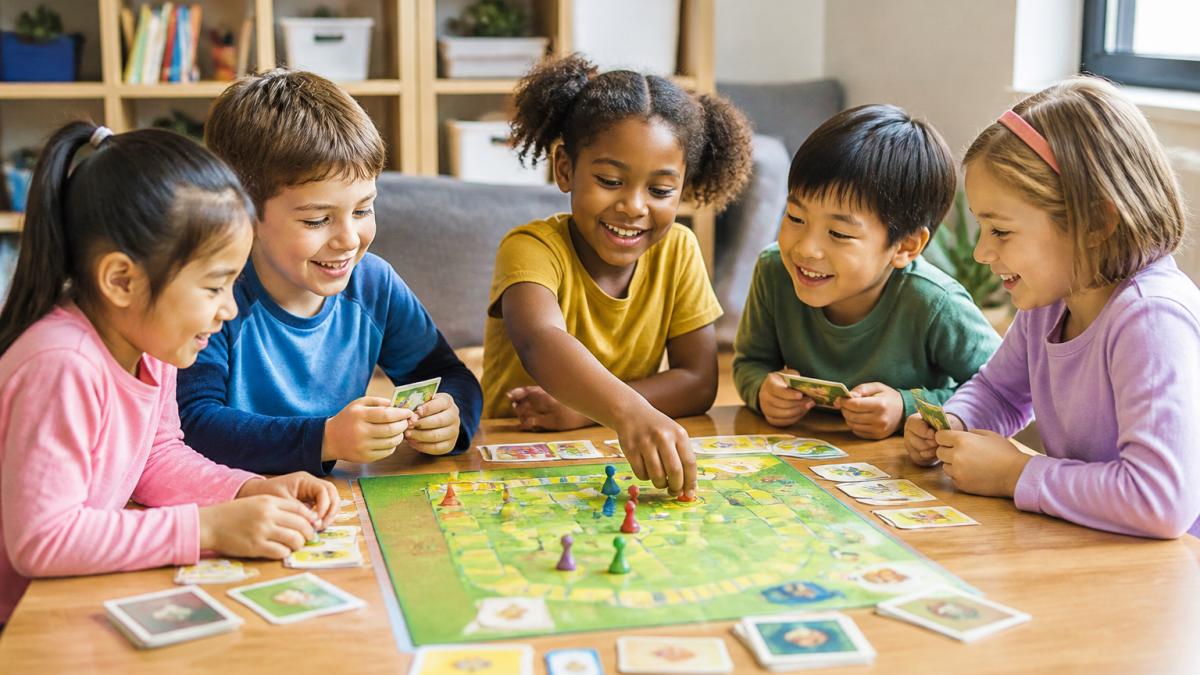
The best teamwork games for kids force genuine cooperation. No single player can win alone. Success requires communication, trust, and willingness to follow someone else’s idea when it’s better than your own.
Effective teamwork games for kids include:
Communication-Based Games Players must describe what they see or know without using certain words. One child describes a picture while others draw it. These games teach kids to explain themselves clearly and listen carefully. They learn that unclear communication causes problems.
Role-Assignment Games Games where each player has a different role, healer, scout, builder, teach interdependence. No role is useless. Every player contributes something only they can provide.
Time-Pressure Challenges When players face a countdown, they must delegate tasks and trust teammates to handle their parts. A child learns to let go of control and rely on others.
Puzzle-Solving Games Cooperative games with puzzles require players to share information and build on each other’s ideas. One child might spot a pattern another missed. Together, they solve what neither could alone.
Teamwork games for kids work because they create situations where collaboration is the only path to success. Children experience directly that teams accomplish more than individuals.
Empathy Activities for Children: Role-Playing and Story-Based Learning
Empathy activities for children work by letting kids step into someone else’s shoes. When children role-play as different characters, they practice imagining how others think and feel.
The most effective empathy activities for children include story-based elements. A child might play a character facing a moral choice.
Role-playing games naturally build empathy. When a child creates a character and develops that character’s personality, they think deeply about motivation. Why would this character act this way?
Story-based empathy activities for children also include:
Character Journaling Children write or draw from a character’s perspective. How does this character see the world? What worries them? What makes them happy? This practice builds the habit of perspective-taking.
Dialogue Games Players take turns speaking as different characters having a conversation. One child plays a shy character, another plays a confident one.
Consequence Exploration Games that show how one character’s actions affect others teach empathy directly. A child sees that their choice to help or ignore someone changes the story.
Collaborative Storytelling When children build a story together, they must consider how their contributions affect other players’ characters.
Empathy activities for children work because they make perspective-taking concrete and rewarding. Kids don’t just learn about empathy, they practice it repeatedly through play.
How to Choose the Right Character Building Game by Age and Learning Style
The right character building game for kids depends on age, reading level, and how your child learns best.
Ages 3-5: Simple, Colorful, Short Young children need games with minimal rules and turns that last a few minutes.
Ages 5-7: Story-Driven, Cooperative, Moderately Complex This age group loves stories and can follow basic game rules. They’re ready for games that last 15-20 minutes.
Ages 7-9: Strategic, Longer Play, Meaningful Choices Older elementary children can handle more complex rules and longer games. They enjoy games requiring actual strategy.
Consider your child’s learning style:
Visual Learners Choose games with strong art, clear symbols, and minimal text. Character building games for kids who are visual learners should feature colorful characters and easy-to-understand illustrations.
Social Learners Pick games requiring conversation and collaboration. Games where children must discuss strategy and negotiate choices work well.
Kinesthetic Learners Look for games with physical elements, moving pieces, building components, or acting out actions. Some children learn better through movement than sitting and thinking.
Logical Learners Choose games with clear cause-and-effect relationships. Games where strategy directly determines outcomes appeal to logical thinkers.
Also consider screen time preferences. Some families want digital games. Others prefer physical games. Both can teach character effectively, the content matters more than the format.
Safety, Screen Time, and Accessibility in Character Building Games
Safety matters when choosing character building games for kids. Parents worry about hidden costs, inappropriate content, and excessive screen time.
Screen Time Balance The best character building games for kids work alongside offline activities, not instead of them. Games should encourage physical play, outdoor time, and face-to-face interaction.
Appropriate Content Character building games for kids should align with your family’s values. Check what messages the game teaches. Does it reward kindness or competitiveness? Does it include violence or scary elements? Read reviews from other parents.
Privacy and Costs Understand the pricing structure before buying. Some games include hidden costs or in-app purchases. Look for games with clear, upfront pricing. Check privacy policies, your child’s data should be protected. Reputable providers are transparent about how they use information.
Accessibility The best character building games for kids include options for different abilities. Look for games with:
- Adjustable difficulty levels
- Colorblind-friendly designs
- Clear audio and captions for video content
- Characters representing diverse backgrounds and abilities
Inclusive character representation matters. When children see characters who look like them or have similar experiences, they feel more connected to the story. Games featuring diverse characters also teach children to value differences.
Conclusion: Making Character Development Fun and Lasting
Character building games for kids work because they make learning feel like play. Children practice kindness, teamwork, and empathy while having fun. These skills stick because kids experience them directly, not just hear about them.
The best character building games for kids combine engaging stories, meaningful choices, and genuine cooperation. They teach that how you treat others matters. They show that helping teammates feels good. They build habits of empathy and kindness that extend far beyond the game.
At Dewey Does, we believe character development is too important to leave to chance. Our engaging educational cartoon characters and diverse range of learning activities, from interactive games and puzzles to creative coloring and captivating stories, are designed to spark curiosity while building strong character traits. We’ve been helping families make learning an adventure since 1999.
Start with games matching your child’s age and interests. Watch what your child learns and enjoys. Let their enthusiasm guide you toward the games that work best for your family.
Frequently Asked Questions
What are the best character building games for kids with short attention spans?
Games that rotate activities frequently, offer quick wins, and include colorful visuals work best. Look for titles combining character customization with short gameplay sessions (5-15 minutes). Games mixing storytelling, avatar creation, and interactive choices keep engagement high. Variety prevents boredom—combining digital games with hands-on character-building activities for kids like drawing or crafting extends focus time and maintains interest across different learning styles.
How do character building games teach kids kindness and empathy?
The best kindness games for kids embed moral choices into gameplay. Players make decisions affecting characters or communities, experiencing consequences of kind versus unkind actions. Story-based games show how choices impact others, building emotional intelligence. Role-playing elements let children step into different perspectives. Games rewarding cooperation over competition, helping NPCs, or solving problems peacefully reinforce empathy naturally. This experiential learning sticks better than lectures because kids discover values through play.
Can character building games work for kids with different ages and reading levels?
Many modern character building games for kids offer adjustable difficulty, visual storytelling, and audio narration, making them accessible across age ranges. Picture-based games suit early readers (ages 3-5), while chapter-based adventures work for fluent readers (ages 6-9). Family-friendly platforms often include separate difficulty modes or character progression systems allowing younger and older siblings to play together or separately on the same subscription. Check individual game accessibility features before purchasing.
What makes teamwork games for kids different from solo character-building games?
Teamwork games for kids require players to communicate, share resources, and coordinate actions toward shared goals. Solo character-building games focus on individual avatar customization, story progression, and personal achievement. Multiplayer or cooperative games teach negotiation and compromise. Both develop character—solo games build self-directed learning and creativity, while teamwork games teach social skills. The best approach combines both: character development through personal growth and through collaborative play with peers.
The foundation of strong character is built through experience, not instruction. When children play games teaching kindness and teamwork, they internalize these values. They become the kind people you’re raising them to be. Character building games for kids aren’t just entertainment, they’re an investment in who your child becomes.